Category

Business Case & ROI

24 insights · page 2 of 3

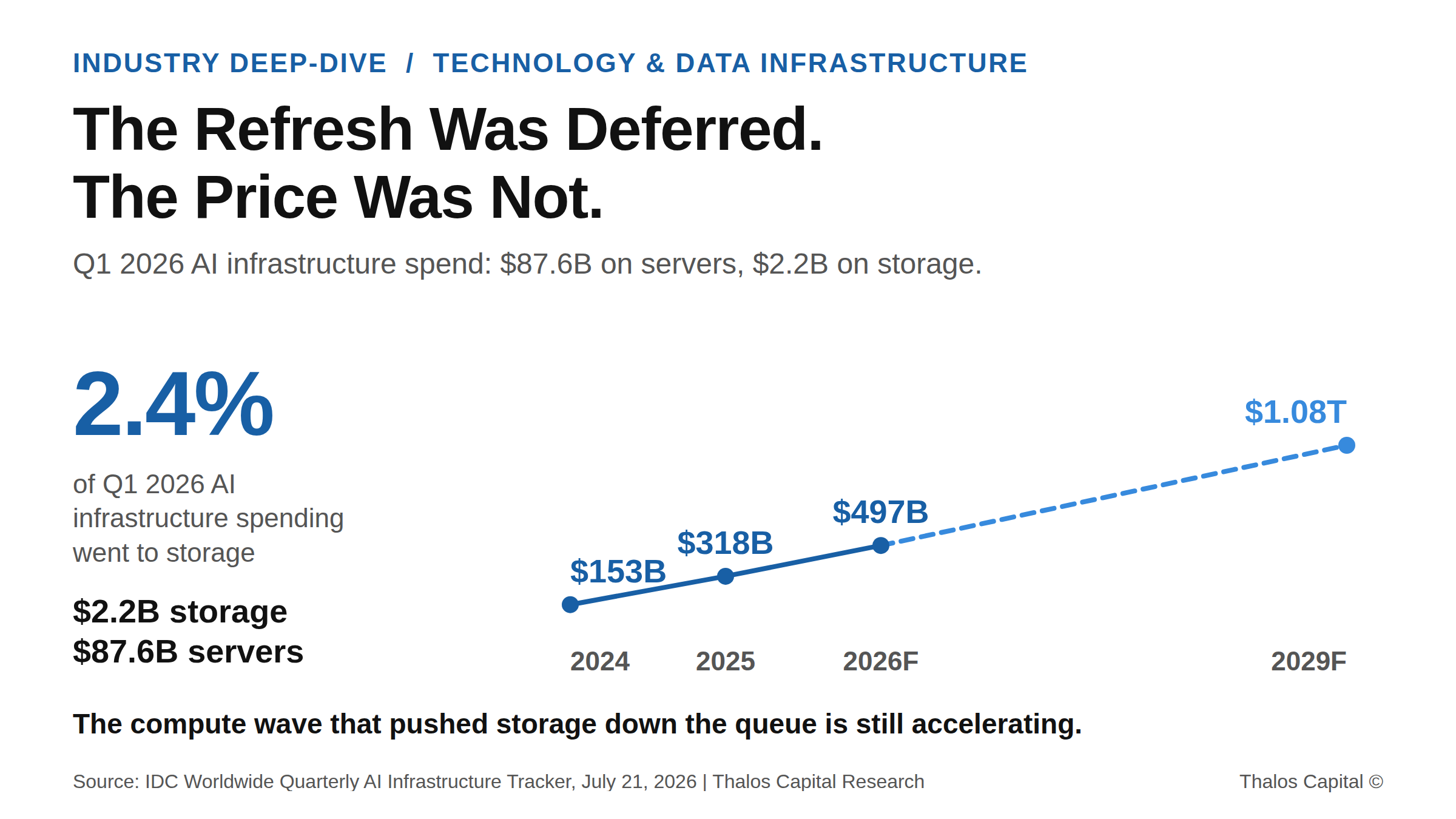
Trend line showing global AI infrastructure spending rising from $153B in 2024 to a forecast $497B in 2026 and $1.08T in 2029, with a callout that storage took 2.4 percent of Q1 2026 spending.

The Storage Refresh You Deferred Comes Due at 2026 Prices

Storage took 2.4% of Q1 2026 AI infrastructure spending. That deferral is expiring into a component market that has repriced every quarter. What it costs, and how to structure the refresh.
Read More
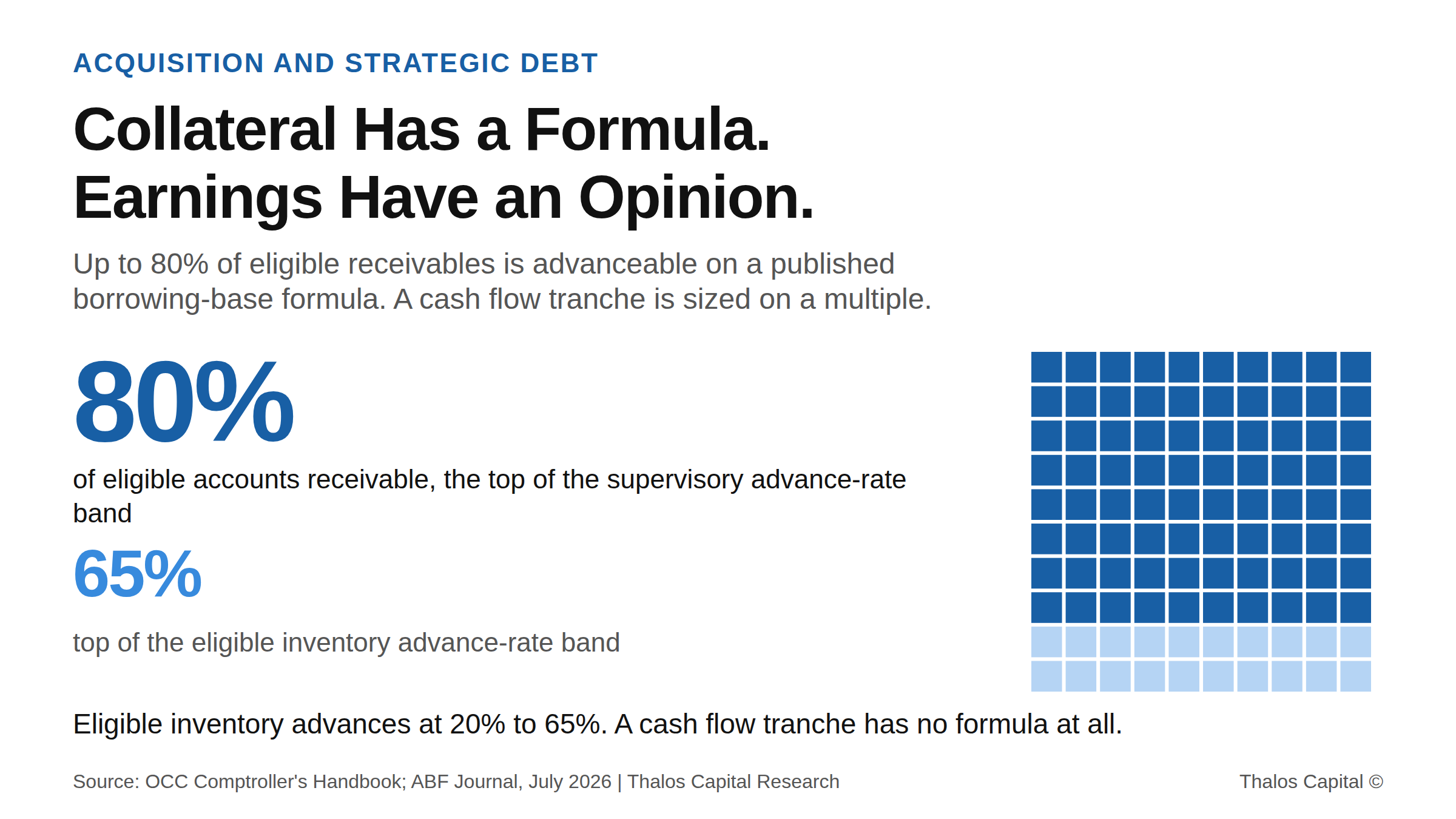
Squares pictogram showing 80 of 100 filled, representing the top of the 70 to 80 percent advance-rate band on eligible accounts receivable under a borrowing-base formula, with the 65 percent eligible inventory ceiling shown alongside.

You Are Buying a Balance Sheet and Financing It Like a Cash Flow Statement

Two facilities priced 200 to 250 basis points apart in the same week. The difference was collateral, not credit. Why acquisition debt sized only on EBITDA leaves both pricing and capacity on the table.
Read More
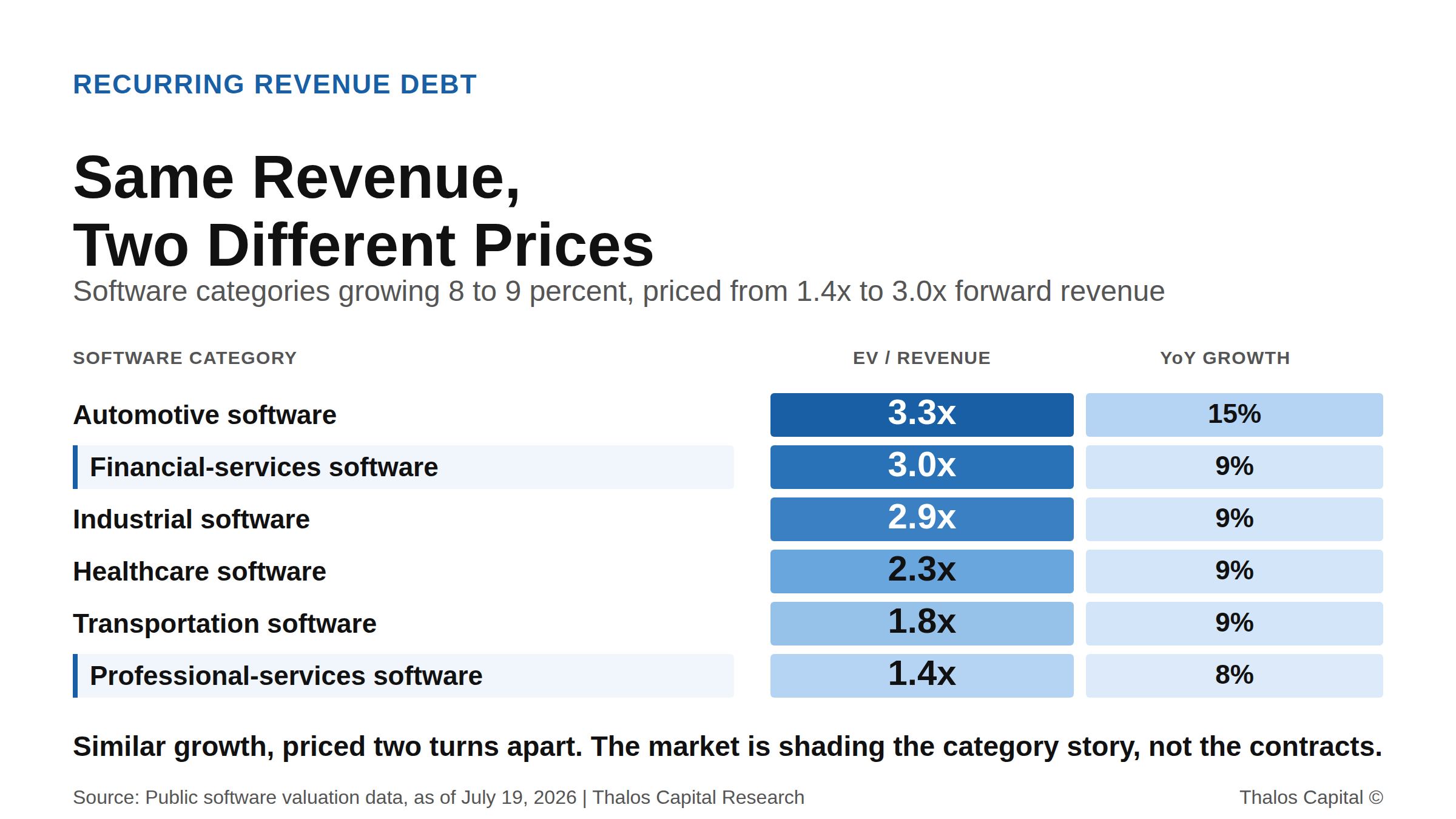
Shaded grid of software categories showing similar 8 to 9 percent revenue growth priced from 1.4x to 3.0x forward revenue as of July 19, 2026.

Two Companies, the Same $6M ARR, Priced Two Turns Apart: The Gap Is Narrative, Not Revenue

Two software companies at the same $6M ARR can be priced two turns of revenue apart on category narrative alone. Here is what that gap costs in dilution, and the non-dilutive debt alternative.
Read More
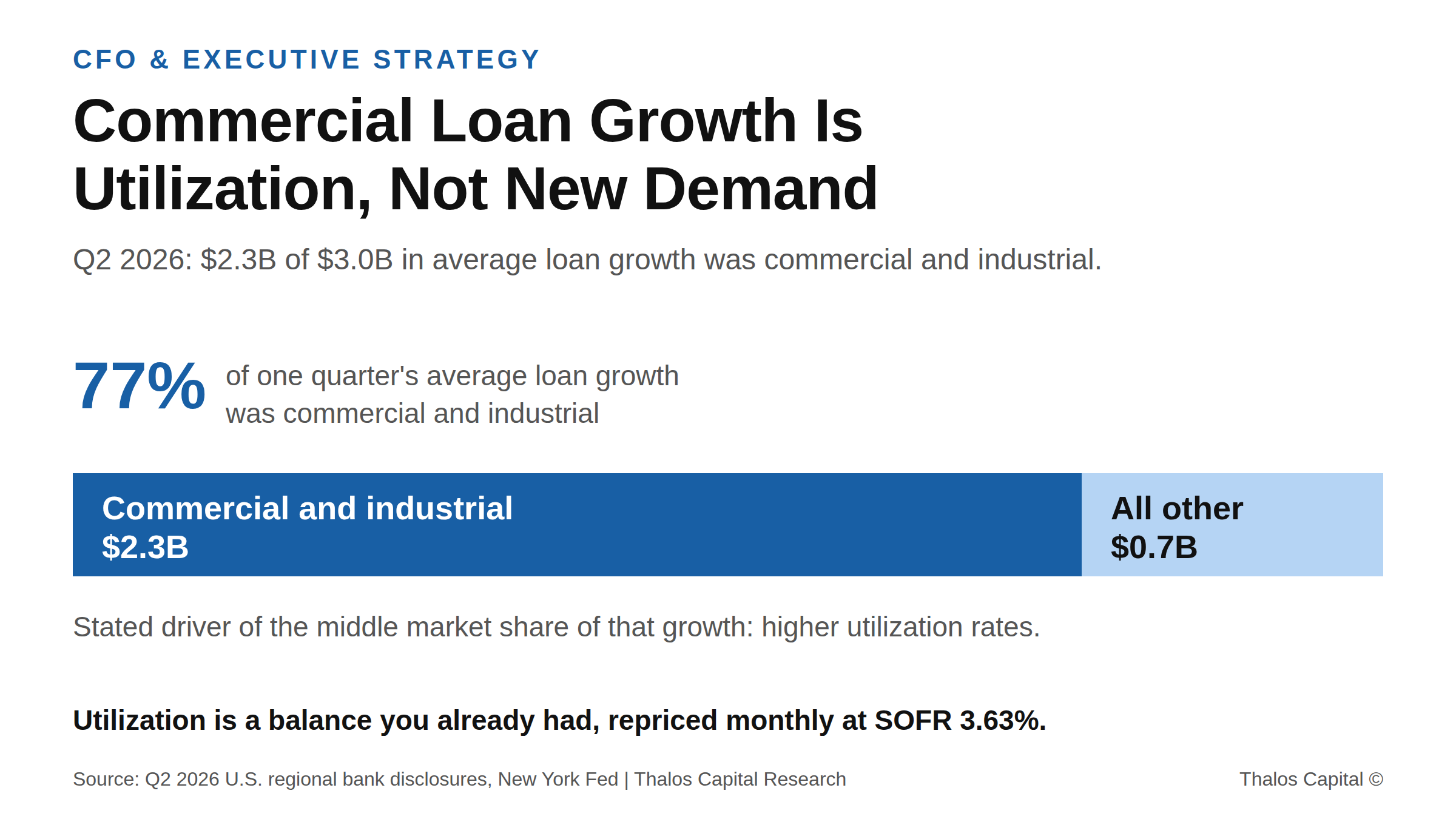
Stacked bar showing $2.3 billion of $3.0 billion in one quarter's average loan growth at a large U.S. regional bank was commercial and industrial, driven by higher utilization rather than new borrowers.

Rising Revolver Utilization Is a Liquidity Signal, Not a Growth Signal

Middle-market commercial balances are rising on higher revolver utilization, not new borrowers. With SOFR at 3.63% and September hike odds at 63%, a drawn line funding permanent assets costs twice.
Read More
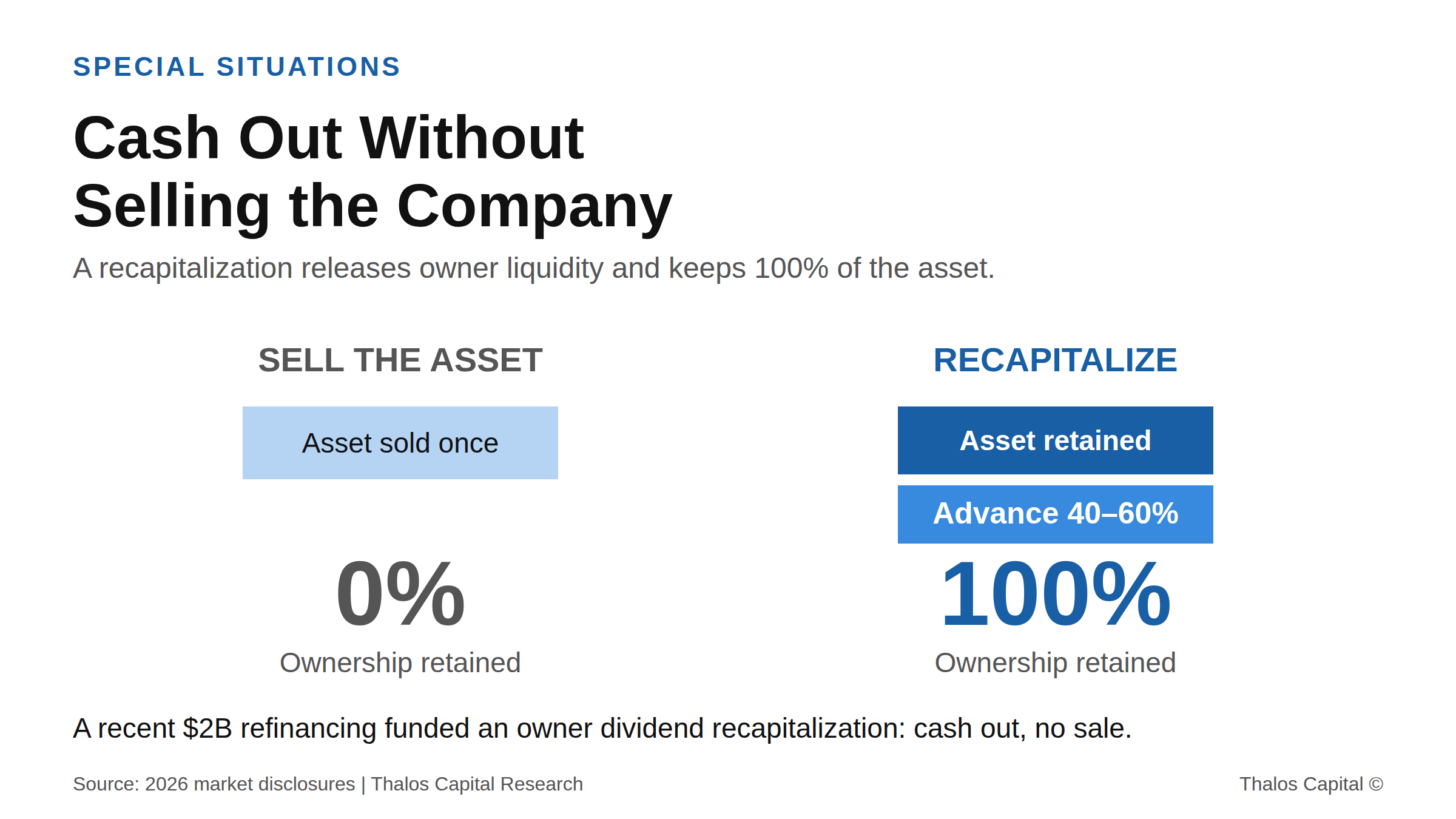
Comparison of two paths to owner liquidity showing a sale ending ownership at zero percent versus a recapitalization advancing 40 to 60 percent of appraised value while retaining 100 percent ownership.

Liquidity Without a Sale: The Recapitalization Most Owners Never Model

Selling is not the only way to get liquidity out of a business. A recapitalization releases owner cash while keeping the asset and the upside. Here is how it works and when to use it.
Read More
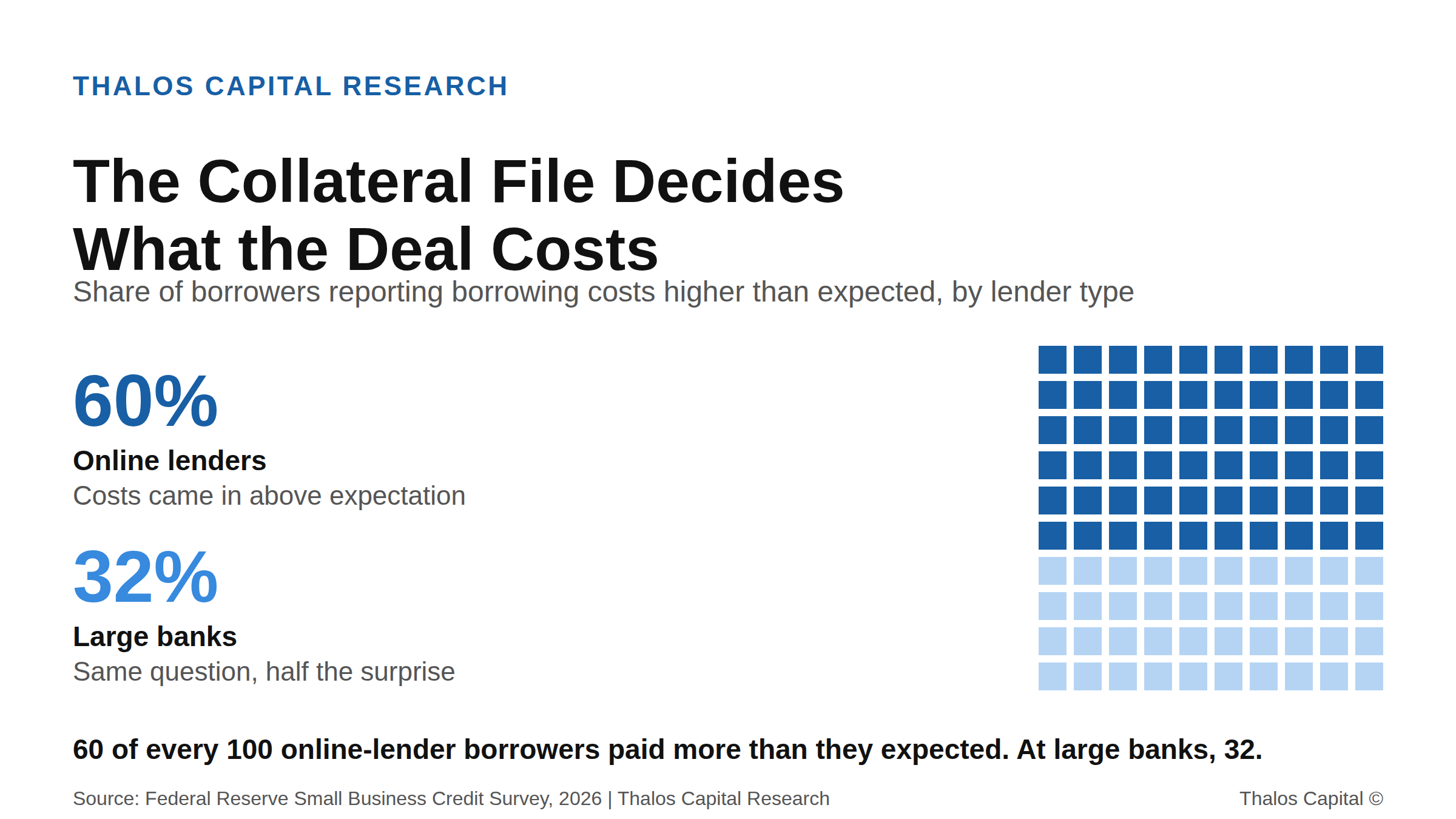
Waffle chart showing 60 of 100 squares in dark navy, representing the 60 percent of online-lender borrowers who reported borrowing costs higher than expected, compared with 32 percent at large banks.

Collateral Verification Is Now the First Diligence Question, Not the Last

Sixty percent of online-lender borrowers paid more than they expected. The gap is not about lender type. It is about what the borrower verified before the process started.
Read More
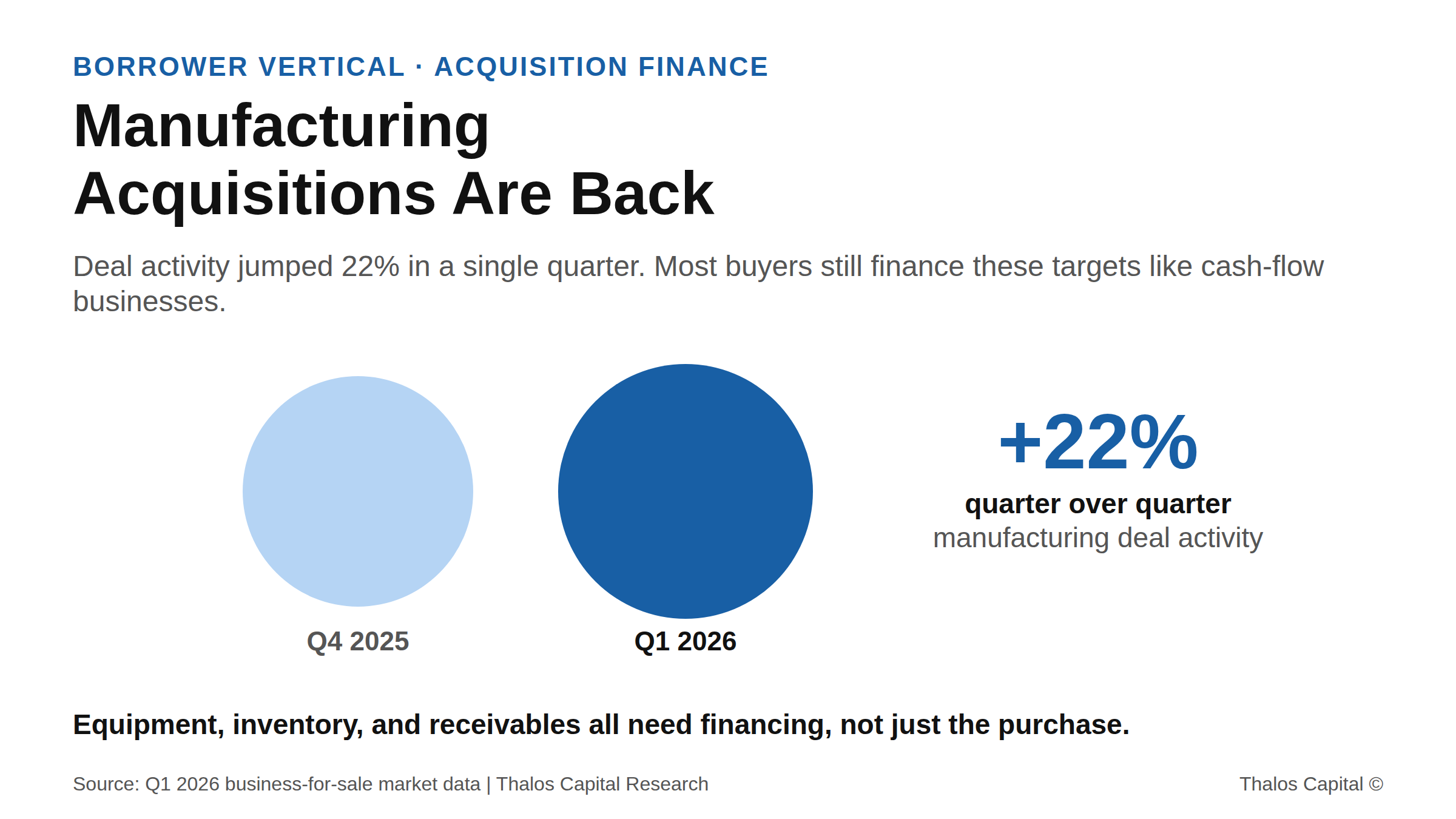
Two proportional circles showing small manufacturing acquisition activity rising 22 percent from Q4 2025 to Q1 2026, with a caption that equipment, inventory, and receivables all need financing, not just the purchase.

Manufacturing Acquisitions Are Back. Financing Them Like a Cash-Flow Buyout Isn't.

Manufacturing acquisitions jumped 22% in Q1 2026, but buyers financing them with a single acquisition loan leave equipment, inventory, and working capital unfunded. Why asset-heavy deals need a blended capital stack.
Read More
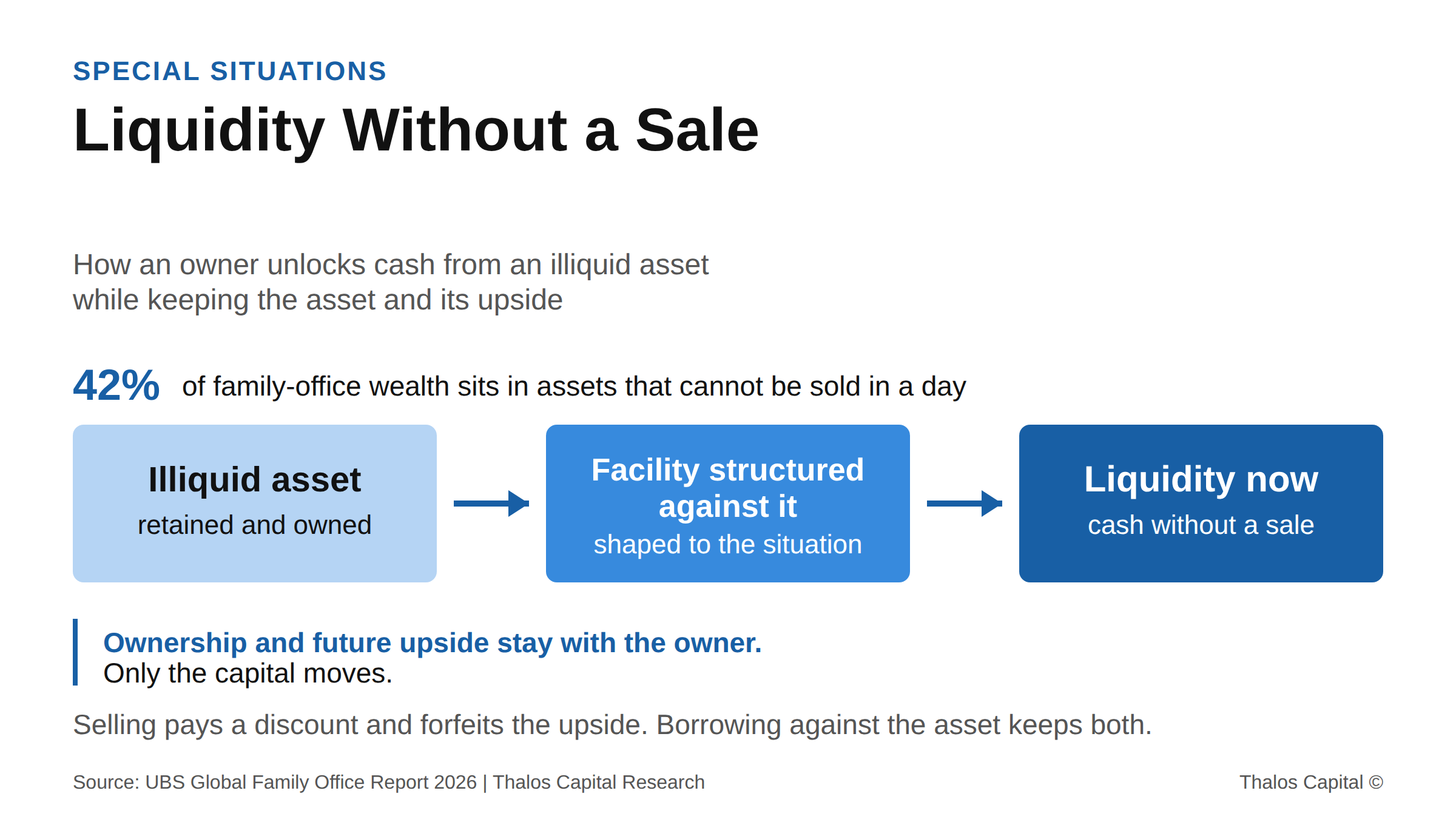
Anatomy diagram showing an illiquid asset retained by its owner, a facility structured against it, and liquidity released while ownership and future upside are kept.

Selling the Asset Is the Most Expensive Way to Raise Cash

Selling an illiquid asset to raise cash costs twice, in discount and in forfeited upside. How owners unlock liquidity by borrowing against the asset instead of selling it.
Read More
Working through a financing decision?
Insights are a starting point. A conversation maps your actual options.
Tell us what you are financing and we will map the structures and sources that fit.
Submit your financing request →
Explore our financing solutions
Equipment FinancingWorking CapitalAsset-Based LendingStrategic Debt